
Brew the Nib like these Pros!
Posted by David Nilsen on Jan 8th 2026
In Collaboration with David Nilsen [Freelance beer journalist, speaker, podcast host, & Advanced Cicerone©. Author of Pairing Beer & Chocolate book] davidnilsenbeer.com
From Nib to Brew: Cocoa Beyond the Bar
Cacao nibs are by far the most common format for adding chocolate flavor to beer.
Before cacao beans are turned into chocolate, they get fermented and dried, and then they’re typically roasted (in devices very similar to the drum roasters used to make dark malts) to bring out more flavor. After roasting, the now-brittle beans are broken up into small fragments called nibs.
Cacao nibs add a depth of character to beer that isn’t matched by any other format of cacao, providing a true chocolatey flavor and a richness to the mouthfeel of the beer.
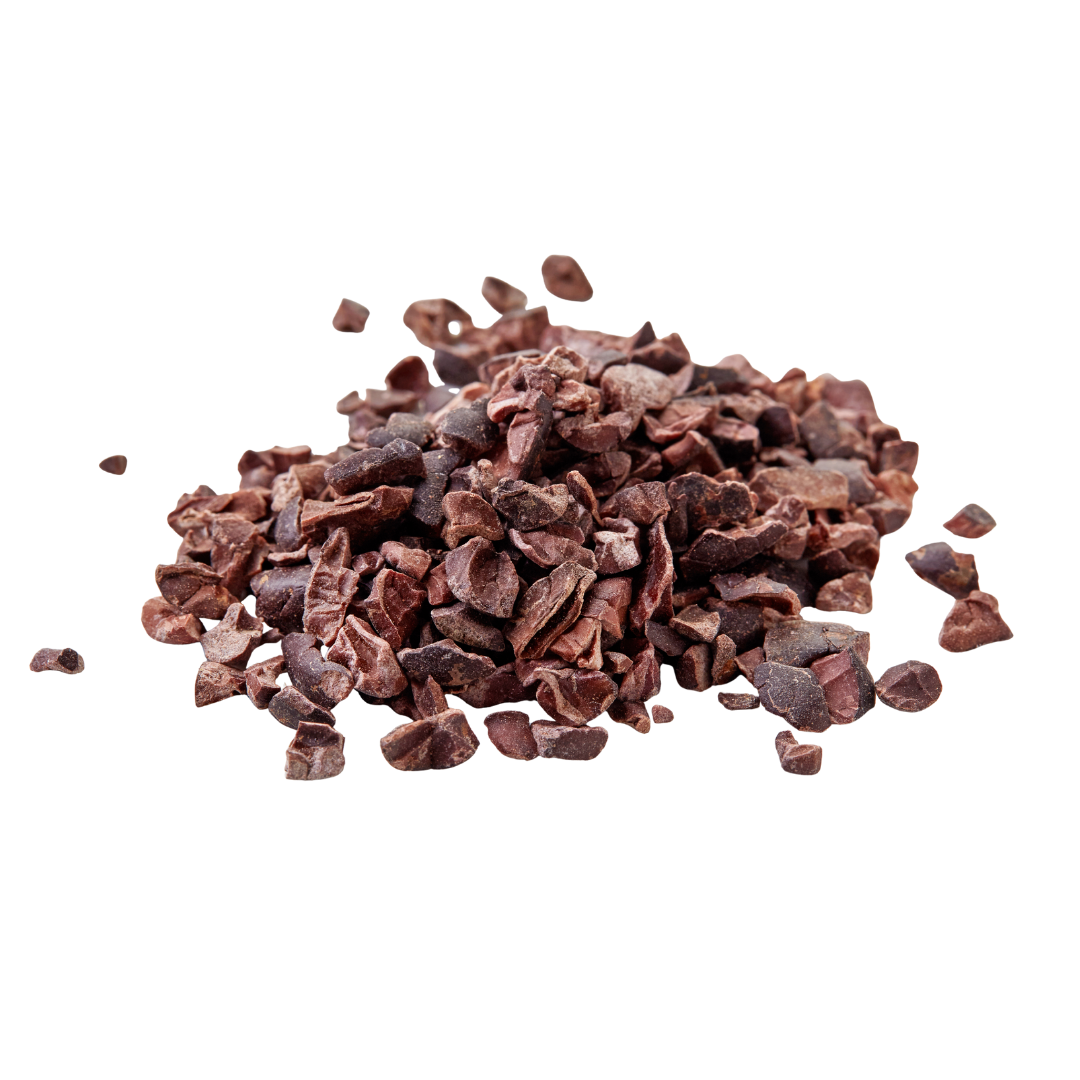
“I like to make a stout as chocolatey as possible before it gets nibs added to it, and then the nibs take it over the edge,” says Geo Bauman, head brewer at Commonwealth Brewing in Virginia Beach, Virginia. “With nibs, the bodies are different. They’re thinner and lighter without nibs.”
Bauman echoes what most brewers know to be true: if you want to make a beer with the taste and feel of real chocolate, you have to use the same stuff chocolate is made from.
Best Practices
In addition to providing the truest chocolate flavor, nibs are also relatively easy to use. The vast majority of brewers choose to infuse a beer with nibs during secondary fermentation, when the beer is resting at a cold temperature. This allows for a smooth, consistent infusion rate, and avoids any potentially harsh extractions from being added during the boil.
A small handful of breweries choose to steep cacao nibs during primary fermentation, though theobromine in cacao can potentially inhibit some yeast strains. There hasn’t yet been sufficient research done to determine if Saccharomyces yeast will interact with cacao flavor compounds in interesting ways, so for the time being, there is little to recommend infusing at this point in the process. You have enough other variables to monitor already at this stage.
Nearly all brewers use one of two methods for a clean and predictable infusion depending on their available equipment.
First, many brewers fill mesh hop bags with nibs and dunk these into the beer like tea bags. The bags are typically left in the beer for 4-10 days, and can then easily be removed when the desired flavor is achieved. It is recommended to use a recirculation pump periodically to make sure the beer is evenly infused, or to carbonate the beer while the nibs are steeping. As long as the beer is under pressure, there is no risk of blowing off volatile aromatics from the nibs by doing this.
Second, many brewers use an external recirculation vessel—a brink, hop cannon, or related device—to continuously circulate the beer through a filter of nibs. This not only ensures even extraction, but is also much more time efficient than the standing steep method, typically taking only a couple days. Also, it allows the brewer to easily taste test along the way and immediately halt extraction when the desired flavor level is reached. If your facility allows for it, this is the best method for infusing nibs.
Some breweries, including Barreled Souls Brewing in Saco, Maine, opt to toast their nibs just before infusion to brighten their flavors. Head of brewing Chris Schofield puts his nibs in a 350° F oven for 20 minutes, stirring halfway through.
“The depth of flavor is unmatched,” he says. “Nothing I’ve used before has the same depth of dark chocolate, brownie batter intensity.”
Flavor Considerations
While the specific origins of cacao matter tremendously when making chocolate, many of these nuances are reduced when the nibs are added to beer. Still, it’s best to work with your provider to source a cacao origin that offers a true chocolate flavor without bold acidity or fruitiness. Subtle earthiness or baking spice notes are acceptable accents.
One counterintuitive thing to keep in mind when brewing with cacao nibs is their potential bittering addition. While we often associate chocolate with sweetness, that’s because chocolate candy and desserts have a lot of sugar added to them. Cacao nibs themselves are not sweet, and can actually amplify bitterness from hops or roasted malt. It’s important to balance for this when writing a recipe using nibs.
“We’re known for putting out very decadent stouts,” says Bauman. “I make the beer as chocolatey as possible in the brewhouse with pale and chocolate malts, and then I tell the guys to ‘nib bomb’ it. Because our stouts are so sweet, they can handle the bitter contribution that the nibs supply.”
Roasted nibs also have some acidity to them, so slightly increasing the beer’s pH might be warranted, though the adjustments you’re already making when working with dark malts are likely to be sufficient.
While chocolate is delicious on its own, most brewers working with cacao nibs opt to pair this flavor with complementary adjuncts like vanilla, lactose, spices, coffee, or fruits commonly served with chocolate, such as cherry or banana. The sky is the limit here, and many fun dessert concepts are possible, but don’t lose sight of the fact that all of these ingredients—cacao included—are botanical, agricultural ingredients, and the most interesting results might be found in a thoughtful, nuanced approach that highlights this.