
New Year, New Ambitions: Why Working With Cacao Is a Strategic Choice
Jan 15th 2026
It’s time to make plans for the new year as the holiday season has come to an end, the bustling schedules are freeing up, and it’s time to make new plans. This means going through the new recipes, analyzing the suppliers, checking the workflows and margins. Building around what worked and what didn’t last year? In the food sector, which ingredients are still worth building around in the long run?
Cacao as a Foundation Ingredient for Food Businesses
Cacao is really more than just a flavor that everyone knows and loves. It is a very important ingredient. It influences the shape, the feel, the smell, and the overall character of the product. It is an opportunity for a business to become different from its rivals by selecting an elaborate, high aroma cacao, while still a lot of restaurants and cafes are using standard cocoa. A mere cup of hot chocolate could be all the way from basic to “Let’s do this every day!”
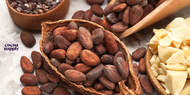
Cacao is a very flexible ingredient. It is hard to imagine a more unyielding one. Cacao in its different states: cacao beans, cacao liquor, cacao butter, cacao powder, and cacao nibs, allows a factory to produce a variety of items from one single order from one vendor.
If the user is using CocoaSupply Ecuadorian fine aroma cacao liquor (commonly known as cacao paste), one will observe that it enhances every recipe that involves baking chocolate. It is a basic ingredient, as it has both cacao solids and cacao butter. It is not just incredibly rich and complex (with fruity, floral, nutty, and earthy flavor notes along with others), it also allows the users to define sweetness, fat content, and flavor profiles within their creations instead of relying on the pre-formulated generic baking chocolate that has the sweetness, fat content, and flavor profile already defined.
Another major role is played by cacao butter in the structural aspect. It is responsible for the crack, the melting behavior, and the tactile quality in chocolate, and likewise, it is a factor of texture and stability in the catering of the bakery, the frozen desserts, and the dairy-free products such as ice cream and ganaches.In colder months, when crystallization behavior becomes more noticeable, butter quality is a defining variable.
Cacao powder offers precision and control. Differences in alkalization and origin influence color, solubility, and aroma.
Cacao nibs are a contrast. Their bitterness, crunch, and visual beauty enable cacao to come into the limelight in products that are not necessarily completely chocolate-based. For a lot of the companies, cacao nibs are like a creative outlet with no extra complexity in formulation. Just a little sprinkle on top of a dish or dessert sometimes is enough to raise it and make a world of difference.
A Living Legacy Behind Every Cacao Ingredient
To have so many creative options from one supplier, one order, and one shipment is very convenient. But, even more, it is a great privilege to work with cacao as you are choosing to be part of a living legacy that has been around for centuries! Cacao more than simply a crop, it is a family tradition that has been handed down from generation to generation. In Ecuador, for more than a century, the cultivation of cacao has been passed down from one generation to the next, with the knowledge of farming, picking by hand, fermenting, and drying being improved year after year, very often within the same communities. These families not only rely on cacao for their income but also it is the main source of education and livelihoods in many rural areas. Cacao is their world, heritage, pride, and honor.
Beyond the social impact, cacao farming (when done responsibly, as we do in CoocaSupply) supports agroforestry systems that protect biodiversity and improves soil health. Working with cacao means you get to participate in an ecosystem that connects makers to land and cultures. You get to be a part of sustaining people and the environment through long-term relationships.
Cacao, Supply Chains, and Long-Term Viability
Transparency is an absolute necessity for food businesses that think long term. Ingredients without clear traceability are seen as a riska walk later. A reliable supplier that can offer consistency right from the start to the end is needed, since the origin of cacao and the post-harvest practices are directly responsible for the quality of the final product. Reliability is a factor as important as morality when it comes to scaling.
New Ideas
As new ideas start to take shape at the beginning of the year, cacao still tops the list of the most reliable ingredients for basic building. The use of minimally processed, high quality cacao gives manufacturers the ability to create unique products that not only compete but also surpass others.
January is the ideal month to review the support of long-term goals by the ingredients. Cacao's different forms: cacao beans, cacao liquor, cacao butter, cacao powder, and cacao nibs can be applied in all categories. Valentine’s Day is just around the corner; so, the time to be creative and plan for success is now!
Apart from being versatile, cacao is the connection of modern food businesses to something much bigger than just the products that taste (really) good. The decision to work with cacao means becoming a player in the systems that not only support rural livelihoods but also are environmentally-friendly and promote biodiversity preservation. Now that’s a lasting ambition.