
What Are Cacao Nurseries?
Feb 9th 2026
Some of the most important decisions in cacao production happen long before a tree ever even produces a pod. They happen at the nursery stage, when a baby cacao plant exists as a seed, a sprout, and what we call a “young seedling”.
What Is a Cacao Nursery?
A cacao nursery is essentially where the future of a cacao farm is shaped. Healthy seedlings, carefully selected genetics, and proper early care influence a tree’s disease resistance, vigor, productivity, and therefore the potential quality of the beans that tree will eventually produce.
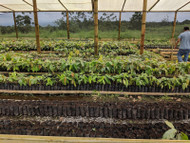
A cacao nursery is a controlled environment where cacao plants are propagated and grown during their earliest life stages, before being transplanted into the field.
Like human nurseries, they protect babies from harm. Cacao nurseries protect young plants from harsh environmental conditions. They allow farmers to select which plants move forward, creating more predictable plantations. They also reduce losses that would happen if wrong seeds were planted directly into open soil.
Nurseries are where cacao seeds are encouraged to germinate, develop roots, and form their first sets of leaves. By the time a seedling leaves a nursery, it is no longer fragile in the same way a freshly germinated seed is. It has an entire root system capable of penetrating into the soil and accessing nutrients effectively. It has a higher chance of surviving transplant and early field stress.
Seedlings typically remain in nurseries for several months before transplanting. During this period, they gradually acclimate to increasing light levels. This process, known as hardening, prepares them for the brighter and more variable conditions of the field.
Germination
Germination is when a cacao seed moves from being in a dormant state into an actively growing plant. This transition needs a combination of controlled moisture, oxygen, and suitable temperature.
Fresh cacao seeds germinate pretty quickly when compared to other crops. Seeds are typically placed in a substrate that drains well while still retaining moisture. If the soil is too compacted it restricts oxygen, waterlogged conditions equal to fungal overgrowth, and dry conditions stop the germination altogether. Ecuador’s ideal climate naturally supports this entire process.
During this stage, weak seeds fail early, and strong ones emerge. A natural selection.
Why Nurseries Are Important for Tree Health
A cacao tree will remain in the ground for decades, and early stress leaves long-term consequences. Seedlings that experience nutrient deficiencies, poor root development, or pathogen exposure early in life in many cases will remain weaker trees, even if conditions improve later.
Healthy nursery management supports:
Strong root architecture
Balanced early growth
Resistance to common pathogens
It also allows for uniformity, which is important. When trees grow at similar rates, farm management becomes easier. Schedules align. Harvest cycles become more predictable. Shade management becomes more consistent.
All of this indirectly affects bean quality because stressed or irregular trees tend to produce inconsistent pods.
Disease Prevention Starts Early
Many of the diseases that affect cacao plantations originate in soil or plant material. Nurseries act as a first line of defense.
Using clean substrate.
Disinfecting tools.
Separating batches.
Removing symptomatic seedlings quickly.
These practices reduce the likelihood that pathogens are distributed across an entire farm through planting material. Once a disease is established across a plantation, it becomes extremely difficult to control. Preventing introduction is far more effective than attempting treatment later.
Genetics and Long-Term Flavor Potential
As we all know, flavor potential is influenced by genetics. Different cacao varieties carry different inherent capacities for producing certain flavor precursors during fermentation. Some varieties tend to produce higher concentrations of floral compounds, for example. Others lean toward nutty or chocolatey profiles. Nurseries are where farms decide which genetic material will dominate their fields. Those decisions echo forward for decades!
Post-harvest processing still matters enormously, of course. But genetics set the ceiling.
The Ecuador Context
Ecuador is globally known for its cacao biodiversity, particularly for Nacional-type genetics and diverse hybrid populations.
This diversity is a strength, but it also requires careful management. Nurseries in Ecuador often work with a wide range of planting material. Some seedlings come from selected mother trees. Others come from local seed sources. Some are grafted while others aren’t.
This creates an environment where nurseries are quite literally curating future landscapes. And, the better organized and intentional this stage is, the more resilient and expressive Ecuadorian cacao can remain over time.
It all starts in the nursery.