
Cacao Nibs: Technical Insights for Makers
Oct 28th 2025
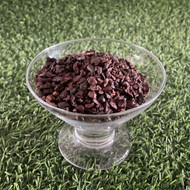
Nibs are cacao beans that have been shelled and crushed. Every chocolate product you have ever tasted was a nib first.
Most people encounter cacao nibs as a crunchy topping at a health shop or as a textural note in an artisan bar. For makers, they are something else: a technical ingredient that sets the initial flavor, viscosity, and performance of chocolate, beer, and baked goods.
If you are here to find a supplier rather than learn the chemistry, start with the box below. If you want the specs that tell you whether a supplier is any good, keep reading.
Quick answer
A wholesale cacao nibs supplier sells roasted, winnowed cacao nibs in bulk to chocolate makers, breweries, bakeries, ice cream producers and cafés, rather than in retail packs. When you are choosing one, look for traceability to a specific farm or lot, a food safety management certification such as FSSC 22000, the product claims you need for your own label, consistent roast and particle size, honest answers about storage and shelf life, and clear volume pricing. Cocoa Supply is a family-owned manufacturer, not a trader, supplying traceable cacao nibs wholesale from Ecuador and Peru, with price breaks on orders above 500 pounds and quotes built to your volume.
What is a wholesale cacao nibs supplier?
A wholesale cacao nibs supplier sells nibs by the sack, drum, or pallet to businesses that turn them into something else. Retail sells you 8 ounces and a nice label. Wholesale sells you a lot number, a spec sheet, and the same flavor again next quarter.
That distinction matters more than it sounds. Once nibs are an input in your recipe, consistency becomes the whole job. A bar, a stout, a gelato base, and a cookie inclusion all fail in different ways when a shipment behaves differently from the last.
There is a second distinction most buyers never think to ask about. Some suppliers are traders, buying from the same aggregated commodity pools everyone else does and selling it on. Others are manufacturers who process at origin. We are the manufacturer, not a trader. Our family has been in the cocoa business in Ecuador since the 1800s; we process at our own facility in Duran and pay farmers premium prices directly. When you ask a supplier where a lot came from, only one of those two models can actually answer.
How do you choose a wholesale cacao nibs supplier?
The checklist we would use if we were sitting on your side of the table.
- Origin and lot traceability. Can the supplier name the country, region, and, ideally, the farm, and tie your shipment to a lot number? Single origin means predictable flavor, and traceability is what makes a sourcing claim on your own packaging defensible rather than decorative.
- Food safety management. Ask for the certificate, not the logo. A certification such as FSSC 22000 means a third party audited the system, not just the product. Ask for spec sheets and a certificate of analysis too.
- The claims you actually need. Work backward from your own label. Kosher, non-GMO, organic, and allergen statements all need supporting documentation from your supplier before you can print them. Worth saying plainly: organic certification is not the same thing as quality. Many of the small family farms growing the best cacao in Ecuador cannot afford to certify, which is why we look at how a farm actually works rather than treating a certificate as the whole answer.
- Roast level and particle consistency. Roast drives flavor; particle size drives process. A brewer steeping nibs in secondary fermentation and a chocolatier folding them into pralines need different things, and both need the same thing twice.
- Fat content and freshness. Nibs are roughly half cocoa butter by weight. US identity standards put chocolate liquor, which is nothing more than ground nibs, at not less than 50 percent and not more than 60 percent cacao fat. That fat is the flavor and also the vulnerability, so ask about packaging, storage, and how long the lot has been sitting.
- Minimums, price breaks and lead times. Get all three in writing. Volume pricing that only appears after you have placed an order is not volume pricing.
- Samples and documentation. A serious supplier sends samples and lot documentation without a fight. If a sample is hard to get, a consistent third shipment will be harder.
Buying cacao nibs wholesale from Cocoa Supply
|
Buying detail |
Cocoa Supply |
|---|---|
|
Origin |
Ecuador, including fine flavor Nacional, plus Peru. Traceable to farm and lot |
|
Business model |
Manufacturer processing at origin in Duran, Ecuador, not a trader or middleman |
|
Grades |
Whole cacao nibs and ground cacao nibs for coffee-style brewing, with an organic-certified range across the catalog |
|
Bulk terms |
Price breaks and additional shipping options on orders above 500 pounds. Quotes built to volume, and no order is too big or too small |
|
Direct trade program |
Farm direct lots from a named plantation, minimum 2,000 kg, about 4,400 pounds |
|
Product claims |
Kosher certified and non-GMO across the cacao range |
|
Segments served |
Craft and bean-to-bar chocolate makers, bakeries and donut shops, ice cream and gelato producers, breweries, distilleries, beverage makers |
|
How to order |
Request a volume quote on the bulk orders page |
Links to place in this section: Cacao Nibs · Ground Cacao Nibs for coffee style brewing · Cacao Nibs and Beans range · Organic products · Bulk orders · About us
Market context worth having while you negotiate. Cocoa came off a historic spike, running to roughly 12,000 dollars per tonne in 2024 and falling back to around 3,500 dollars per tonne by February 2026, inside the range that held for decades. Terms quoted to you eighteen months ago are worth revisiting.
What determines cacao nib flavor and quality?
The specs below are what a good wholesale supplier should be able to meet and explain, and why two bags of nibs at the same price can behave completely differently in your process.
Nibs are roughly half cocoa butter and half cacao solids, with bitterness and astringency as the baseline. The compounds carrying flavor are:
- Polyphenols including catechins, anthocyanins and procyanidins, which drive bitterness and astringency.
- Theobromine with a small amount of caffeine, which adds bitterness.
- Volatile aroma compounds including pyrazines, aldehydes and esters, which create the nutty, fruity and floral notes.
- Organic acids including acetic, lactic and citric, which are byproducts of fermentation and set acidity and brightness.
How those compounds land is mostly decided by fermentation, long before anyone roasts anything. Poor fermentation gives you high acidity and green, flat notes. Careful fermentation, box turnover, and temperature control give you fruity, wine-like complexity. Roasting then triggers the Maillard reaction that releases the deepest chocolate aromatics. A supplier who cannot tell you how much was fermented is telling you something anyway.
What quality specs should wholesale nibs meet?
Quality nibs should be:
- Clean of husk and debris. US identity standards cap shell content in cacao nibs at 1.75 percent by weight on an alkali-free basis, a useful reference point when you read a spec sheet.
- Evenly dried and evenly roasted. Uneven roast is uneven flavor, and it shows up in your finished product, not in the bag.
- Milled to a consistent particle size. We work to a 16 to 75 micron range depending on the product, because fineness is what makes a nib behave predictably in a melanger or a mash.
- Dried to a stable moisture level. We work to roughly 6-7 percent. This is not academic: FDA guidance treats cocoa beans averaging more than 4 percent moldy beans by count as adulterated, and moisture is what invites mold in.
- Stored so fat bloom never starts. Temperature stable, humidity low, packed to keep both true in transit.
How nibs perform across industries
Chocolate manufacturing. Grinding nibs produces cacao liquor, also called cacao mass, which can then be pressed into cocoa butter and cocoa powder. The nib's fat percentage determines the liquor's viscosity and how it behaves during refining and conching. Fine-aroma nibs from Ecuador produce a softer, more floral liquor. If cacao mass is where you are headed, we cover the selection criteria that determine cacao quality.
Brewing. Nibs in the mash work, but they risk extracting enough fat to hurt head retention, and adding them at the boil drives off the aromatics you paid for. Secondary fermentation is where most brewers land, steeping for one to two weeks to pull chocolate notes without dragging in bitterness. Contact time and roast profile are the two dials: lighter roasts read fruitier, darker roasts push toward chocolate and nut.
Baking and pastry. Unlike chocolate chips, nibs do not melt, which makes them a reliable crunch in cookies, brownies, granola, tart shells and finished breads.
Savory. Chefs increasingly treat nibs as a spice, cracked into a rub with chili and garlic for mild bitterness and savory depth, or as a stand-in for nuts.
How should bulk cacao nibs be stored?
Nibs have a lower water activity than most food ingredients, which is why they hold up over time. What they do not tolerate is a neighbor with a strong smell. Our guidance for bulk lots:
- Temperature: 15 to 20 degrees Celsius (59 to 68 degrees Fahrenheit).
- Humidity: below 60 percent.
- Containers: airtight, away from light and away from anything aromatic.
Because nibs are roughly half fat, good storage is what prevents bloom and rancidity and protects the flavor you chose the lot for.
Why origin matters for nibs
Terroir shows up in nibs, not just in beans. Ecuadorian Nacional nibs, in our own cupping, run floral and nutty with a delicate acidity, making them a favorite for bean-to-bar work and premium brewing.
The commercial case is easy to make right now. Ecuador was the number one origin for US cocoa bean imports in 2024, at roughly 421 million dollars, ahead of Côte d'Ivoire. Ecuador is also the world's third largest cocoa producer, while West Africa accounts for about 65 percent of global supply. Roughly 75 percent of Ecuador's cocoa exports are classified as fine flavor. Origin is a signal to your own customer about flavor, consistency, and where their money went.
Practical tips from makers
- Bakers: crack nibs very lightly before folding them into dough, and the nutty notes come forward.
- Brewers: sanitize nibs before secondary fermentation, with steam or a spirit soak, so you add flavor and nothing else.
- Chocolatiers: fold nibs into gianduja or pralines for crunch without adding sugar.
- Cafés: sell a nib-topped drink as a textural upgrade, not a sprinkle.
From Cocoa Supply to your craft
Cocoa Supply supplies cacao nibs wholesale straight from Ecuador. Whether you are building a bar from the bean, brewing a seasonal stout, or adding crunch to pastry, nibs are one of the most flexible products in our catalog. We have generations of experience with cacao, from picking through fermentation to manufacturing, and every step of that changes what lands in your process.
Request a bulk quote and tell us the product, the volume, and where it is shipping.
Frequently asked questions
What is a wholesale cacao nibs supplier? A wholesale cacao nibs supplier sells roasted, winnowed cacao nibs in bulk to businesses, including chocolate makers, breweries, bakeries, and ice cream and café producers, rather than in small retail packs. Wholesale orders usually come with volume pricing, lot documentation, and spec sheets.
How do I choose a wholesale cacao nibs supplier? Check origin and lot traceability, food safety management certification such as FSSC 22000, the product claims you need for your own label, consistent roast and particle size, fat content and freshness, and clear volume pricing and lead times. Ask for samples and lot documentation before committing.
Where can I buy cacao nibs wholesale? Cocoa Supply supplies traceable cacao nibs wholesale from Ecuador and Peru as a manufacturer processing at origin, not a trader. Orders above 500 pounds qualify for additional price breaks and shipping options. Request pricing on the bulk orders page.
What is the minimum order for wholesale cacao nibs? Minimums vary by supplier. Cocoa Supply quotes based on your volume and takes orders of any size, with additional price breaks for orders above 500 pounds. Farm direct lots through our direct trade program start at 2,000 kg (about 4,400 pounds).
Where do the best cacao nibs come from? Fine flavor origins are the ones makers chase. Roughly 75 percent of Ecuador's cocoa exports are classified as fine flavor, and Ecuadorian Nacional, or Arriba, nibs are prized for their floral character and delicate acidity. Best depends on the flavor profile you want and on disciplined fermentation, roasting, and storage.
What certifications should wholesale cacao nibs have? Look for a food safety management certification, such as FSSC 22000, plus whatever your finished-product claim requires. Cocoa Supply's cacao range is Kosher-certified and non-GMO, with an organic-certified range available. A reputable supplier provides certificates and spec sheets on request.
How should bulk cacao nibs be stored? Store nibs in an airtight container at roughly 15 to 20 degrees Celsius (59 to 68 Fahrenheit), with humidity below 60 percent, away from light and strong odors. Because nibs are roughly half cocoa butter, proper storage prevents bloom and rancidity.
Can I get organic cacao nibs wholesale? Cocoa Supply carries an organic-certified range alongside conventional products, available in bulk. Worth knowing that many of the small family farms growing the best fine flavor cacao are not certified, so we look at how a farm actually operates rather than treating a certificate as the whole story.
Works cited
US Food and Drug Administration, 21 CFR 163.111, Chocolate liquor. Current as of August 2026. https://www.ecfr.gov/current/title-21/chapter-I/subchapter-B/part-163/subpart-B/section-163.111
Food Processing, "Cocoa Prices Plummet, Bringing Relief to Chocolatiers and Other Users," February 16, 2026. https://www.foodprocessing.com/ingredient-trends/news/55357884/cocoa-prices-plummet-bringing-relief-to-chocolatiers
US Food and Drug Administration, 21 CFR 163.110, Cacao nibs. Current as of August 2026. https://www.ecfr.gov/current/title-21/chapter-I/subchapter-B/part-163/subpart-B/section-163.110
US Food and Drug Administration, Compliance Policy Guide Sec. 515.750, Cocoa Beans, Adulteration by Mold, Insect Infestation, and Mammalian Excreta. https://www.fda.gov/regulatory-information/search-fda-guidance-documents/cpg-sec-515750-cocoa-beans-adulteration-mold-insect-infestation-and-mammalian-excreta
Villacis, Ñaupari and Dimas, Department of Agricultural, Environmental, and Development Economics, The Ohio State University, "Trick-or-Treat Trends: U.S. Chocolate Market Panorama for Halloween 2025," September 2025. https://aede.osu.edu/sites/aede/files/Villacis_TrickOrTreat_Q42025_updated.pdf
USDA Foreign Agricultural Service, GAIN report BR2025-0028, "Brazil's Role in the Global Cocoa Landscape," August 22, 2025.
USDA Foreign Agricultural Service, GAIN report CO2025-0033, "The Colombian Cacao Sector, Update," December 3, 2025.